
How Can I Embrace Life's Reset After 50: New Beginnings Await
Life Transitions, Personal Growth, Over 50
How Can I Embrace Life’s Reset After 50
(bestbeyond50.co.uk/post/life-reset-after-50-new-beginnings
Short answer: yes — for most people, what feels like life falling apart after 50 is better understood as a reset than an ending, and there are concrete, small steps that make that shift real rather than just a nice idea. Here's how to actually start.
If your life after 50 looks nothing like you imagined, you are not broken — and you are definitely not finished. I built a multi-million pound property portfolio from my early sixties, after going through exactly the kind of rupture — divorce, bereavement — that derails so many women around this age. I know first-hand that this season can become a powerful reset rather than a tragic ending, because I’ve lived both halves of that sentence myself.
Why does life after 50 so often feel like it’s falling apart?
Careers end. Marriages crack. Health shifts. Children move out. Parents decline. Savings disappear faster than planned. After 50, life can unravel in ways that feel brutally unfair and frighteningly fast. You may look around and barely recognise your own story anymore.
In those moments, it’s easy to believe a harsh narrative:“I’m too old to start again. I’ve wasted my best years. I missed my chance.”But that story is incomplete. What feels like a collapse is often life quietly, insistently asking for a reset — a different way of living that your younger self was too busy, too scared, or too loyal to others’ expectations to choose.
Feeling lost after 50 doesn’t mean you’ve failed. It means the old map no longer fits the territory you’re actually in.
This Is Not Your Ending
A quiet moment before a powerful new chapter begins
What’s the difference between a collapse and a reset?
A collapse is the story of “it’s over.” A reset is the story of “this version of my life is complete — now what wants to come next?” The circumstances may look identical from the outside, but the meaning you give them changes everything about how you move forward.
•Losing a job can become a forced pause that finally lets you explore work aligned with who you are now, not who you were at 25.
•The end of a long relationship can open space for healthier connection — with others and with yourself — built on honesty instead of habit.
•Health scares can become a wake-up call to treat your body as an ally rather than an obstacle.
A reset doesn’t erase the pain, the grief, or the fear. It simply refuses to let them be the final word.
How do I stop measuring myself against where I “should” be by now?
A huge part of the suffering after 50 comes from quiet comparisons and invisible deadlines —“by now I should have more money, more stability, a partner, a clear purpose.”When life doesn’t match that checklist, it can feel like a personal failing rather than a simple truth: life rarely follows a straight line.
A reset invites you to gently release those rigid timelines. Instead of asking “what did I fail to achieve?”, start asking “what actually matters to me now, with the experience and clarity I have today?” The answers at 52, 63, or 71 are often wiser — and kinder — than anything you’d have chosen in your 30s. Try rewriting your “by now I should have…” list into “from now on I choose to…” and notice how differently that sits.
How do I actually start a reset, practically?
You don’t need a five-year plan or a dramatic reinvention. A reset is built through small, steady choices that honour who you are today:
1.Tell the truth about where you are.A proper Life Audit — an honest look at what’s fallen apart across work, relationships, health, and finances — is far kinder than denial, even though it’s uncomfortable at first.
2.Notice what still feels alive in you.A long-buried interest, a desire to contribute, a need for rest — these are clues to your next chapter, and identifying your own purpose is often the real starting point.
3.Ask for support.This chapter was never meant to be designed alone. A community of women genuinely on the same path changes how possible it all feels.
4.Take one practical step.Update your résumé, book a health check-up, join a class, or simply walk every morning. Action, even in tiny doses, rebuilds confidence faster than thinking ever will.
So — is this really the end of my story?
When life falls apart after 50, it can feel like a cruel erasure of everything you’ve built. But underneath the loss is something quietly radical: the chance to live more honestly, more intentionally, more fully aligned with who you actually are. That’s the gift hiding inside a reset.
You’re not starting from nothing. You’re starting again with decades of experience, hard-earned wisdom, and a far clearer sense of what actually matters. This isn’t the end of your story — it’s the moment you pick up the pen and decide, consciously, how the next chapter reads.
If you’re ready to get an honest, personalised picture of exactly where you stand right now, our freeSecond Chapter Confidence Quiztakes a few minutes and gives you a clear starting point.
👉 [Take the Second Chapter Confidence Quiz →]
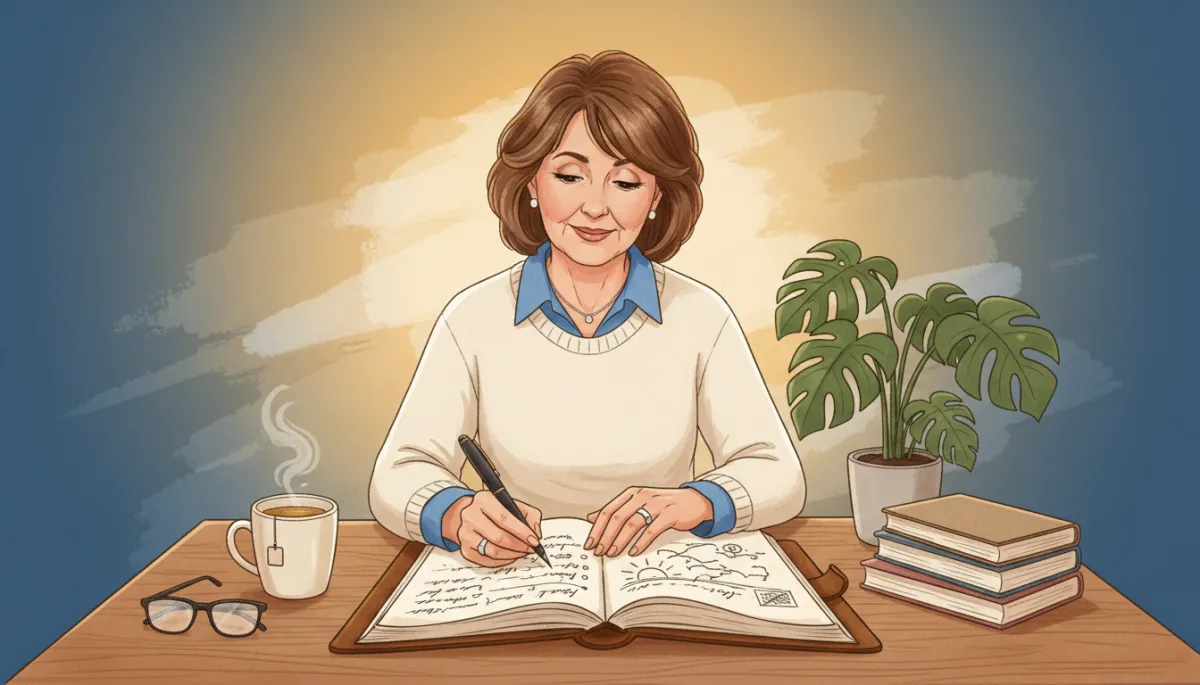
Honest reflection turns painful endings into intentional, self-directed new beginnings.
FAQ
Is it normal to feel completely lost after 50?Yes — careers ending, relationships changing, and health shifting all cluster around this age for many people. It reflects a genuine life transition, not personal failure.
What’s the difference between a midlife crisis and a reset?A “crisis” framing assumes something’s gone wrong that needs fixing. A reset framing treats the same events as the natural end of one chapter and the deliberate start of another — the facts are the same, but the meaning and the path forward differ completely. should I actually start if I want to reset my life after 50?Start with an honest audit of where things currently stand across work, relationships, health, and finances, then identify one small, practical action you can take this week rather than waiting for a complete plan.
